by Patricia Frischer
Symbolism runs riot in all of Chinese culture. Words can
have double meaning depending on their sounds. Materials denote life forces.
Animals and flowers are tools of enhancing celebrations. There are simply an endless
number of symbols that change from region to region and over time.
This lecture sponsored by the SDSU Chinese Cultural Center started
with the major presentation by Allie Arnell speaking about the significance
of numbers and it ended with Lily Birmingham added further insights on
that topic, especially about the significance of numbers. In between, Bob Stein
moderated the discussion. We enjoyed all the interpretations and this also gave us another excuse to just look at wonderful Chinese art works.
Numbers:
The swastika symbol actually started in India and made it
way to ancient China and signifies 10,000. When you see this mark, think vast
quantities of wishes for fertility, security, and happiness. One hundred is a
very lucky number as a symbol of longevity. The 100-flower motif with Crab apple blossom,
peonies, chrysanthemum signifies a hope that the dynasty will last as long as
there are flowers blooming in the world. When you see 5 of anything it could stand for
the 5 blessings: health, wealth, longevity, love of virtue, death by natural
causes.
But
there are bad luck numbers. The number 4
sounds like a similar word for death. Like our number 13, there are no number fours
in elevators. Number three can sound like separation, so bad for business and
marriage. 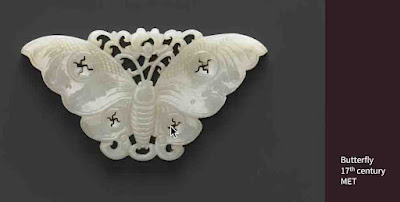 |
| May the butterfly of happiness give you 10,000 best wishes. Note the swastika meaning 10,000. |
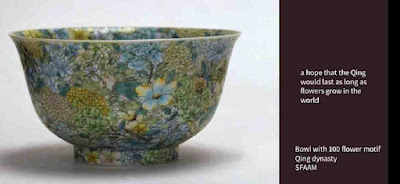 |
| Bowl of 100 flowers |
Animals:
Dragons are the most important symbol of China as a county
and a dragon with 5 claws is imperial. Dragons stand for protection, happiness,
and fertility, and they are the transition between heaven and earth. You often
see a dragon holding a pearl of wisdom.
The dragon and the phoenix are both fantasy animal and a
composite of several species. For
example, in one beast you might see the nose of a camel, ears of a cow, eyes of
a serpent. The dragon is the emperor and the phoenix is the empress. Marriage
presents with a phoenix is congratulation recognizing that the bride is an
empress for the day.
The Crane is longevity so pairs of cranes are given for
marriage celebrations. A flying crane denotes
success. The pheasant is a bird of wealth and the peacock of enlightenment. Mandarin
ducks mate for life. Fish symbolize abundance perhaps because of the quantity
of eggs they produce. A Crab shell and the word armor sounds similar to the
word for success. The Chinese sound for the word bat is similar to that for
blessings. Magpies mean happiness.
The strength of the material, like jadeand metal
denotes strength of character. The vase shape is thought to represent peace. A
gourd shape brings fertility. A vase covered with bats thus is blessings of
peace as vast as the sky. An added sash on a vase can mean blessings for many
generations.
 |
A vase covered with bats thus is blessings of peace as vast as the sky. An added sash on a vase can mean blessings for many generations. |
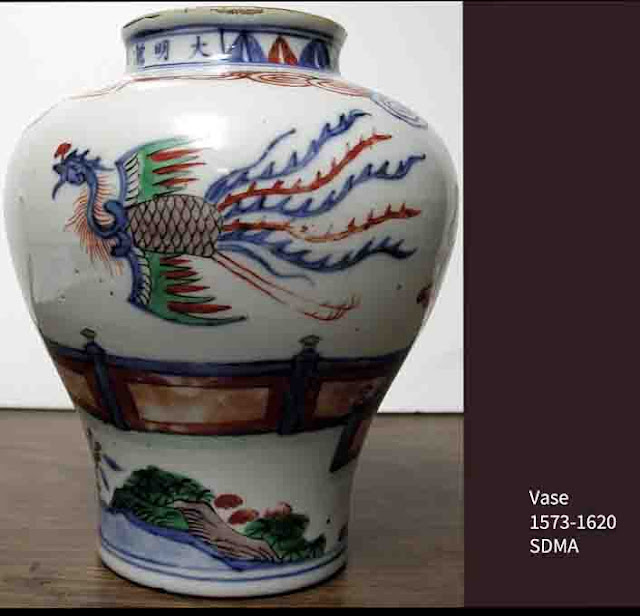 |
| Phoenix made from a composite of other animals: the Empress symbol |
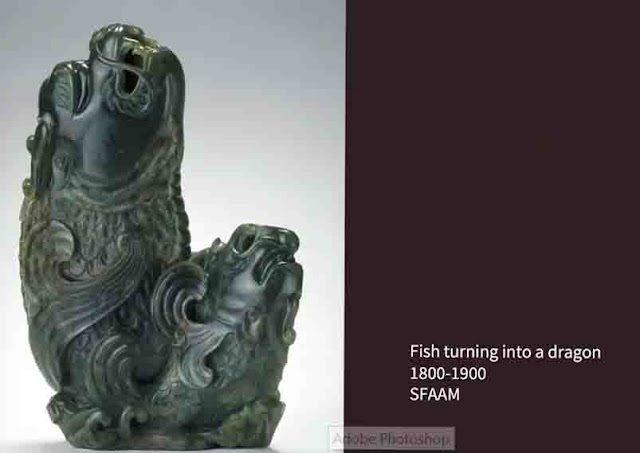 |
A carp jumping over gate and turning into a dragon would be a present to a scholar to gain success,. |
Fruit and Flowers:
Peaches
equal longevity, so a gift with peaches and bats would make a great birthday
gift. The other symbol for best wishes is clouds. You find cloud symbols many
times as stylized motifs on most pottery. If you add bamboo which bends but
does not break you get perseverance, congratulations and longevity. Hibiscus stands for good fortune. Mushroom
like fungus shapes are longevity and even immortality. Peony stands for wealth
and honor and is the king of flowers. The word plum sounds like the word for
eyebrows. So plum with dragons and magpies could mean happiness up to your
eyebrows. The Lotus flower stands for fertility
as it grows into a pure white flower out of the mud.
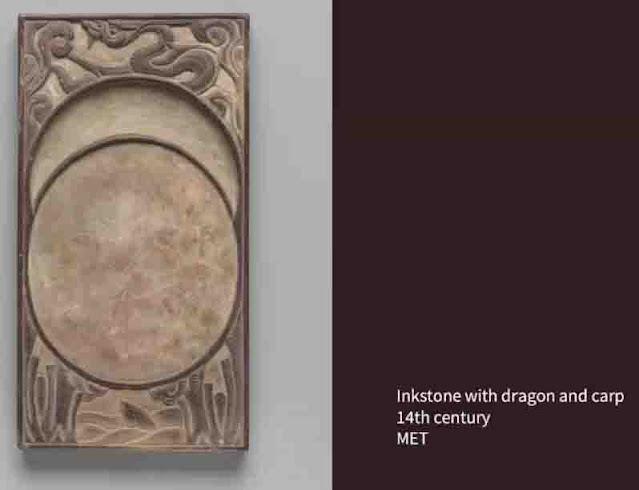 |
| Another example of carp and a dragon, this time on the stone for making ink which would be a present to a student wishing for good luck. |
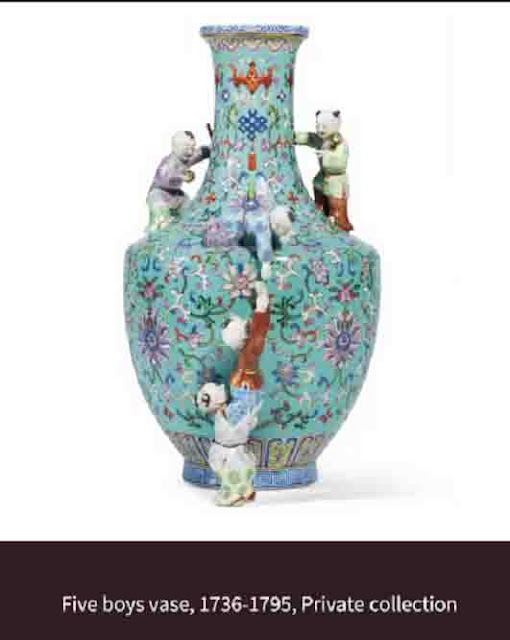 |
Vase Boys playing – good wishes that you may have five sons |
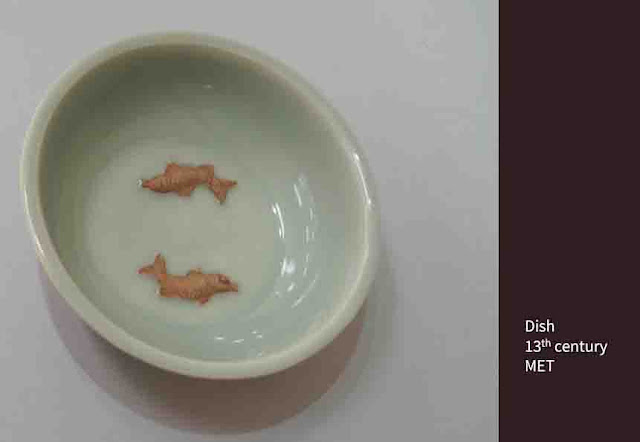 |
| A final simple but stunning dish with two delightful fish....one of my favorites. |
Suggested reading by Ms. Arnel is
Hidden Meanings in
Chinese Art, by Terese Tse Bartholomew, 2006. ISBN 0-939117-36-3 which is organized by motifs.


